
Owning commercial real estate can create long-term income, support business growth, and provide an asset that may appreciate over time. It can also introduce responsibilities that are very different from those associated with a home. A commercial owner must think about tenants, operating expenses, legal obligations, building systems, financing, insurance, and the condition of the property as a whole.
The strongest results usually come from treating ownership as an ongoing business rather than a passive investment. Even a well-located building can underperform when maintenance is deferred, leases are weak, records are incomplete, or capital expenses are ignored. A beginner does not need to know everything on the first day, but a clear process for evaluating, operating, and improving the property is essential.
Start With a Clear Ownership Strategy
Before purchasing a building, define what the property is expected to accomplish. Some owners want stable rental income, while others are more interested in redevelopment, long-term appreciation, or occupying part of the building themselves. The intended strategy affects the type of property, the acceptable level of risk, the financing structure, and the amount of management attention required.
A small retail strip, warehouse, medical office, and multi-tenant office building may all generate revenue, but they do not operate in the same way. Each asset type has different tenant expectations, maintenance needs, parking demands, and market pressures. Beginners should focus on properties they can understand rather than pursuing a building solely because its projected return appears attractive.
Evaluate the Property Before Committing
Thorough due diligence protects a buyer from acquiring problems that were not reflected in the asking price. The process should include a review of leases, operating statements, tax records, utility costs, maintenance histories, permits, environmental information, and existing service contracts. Physical inspections should also cover the roof, structure, electrical system, plumbing, drainage, pavement, windows, and life-safety equipment.
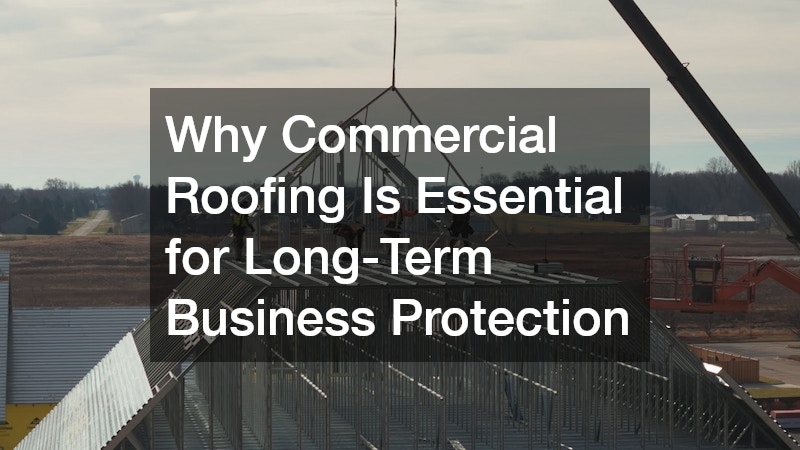
The building’s roof deserves particular attention because deterioration may remain hidden until leaks damage ceilings, inventory, finishes, or tenant spaces. If an inspection suggests that a commercial roof replacement will be needed soon, the projected cost should be reflected in the purchase analysis rather than treated as a distant concern.
Buyers also need a reliable opinion of value. Professional commercial appraisals consider the property’s income potential, comparable transactions, condition, location, and market environment. The appraisal is not a substitute for independent analysis, but it gives lenders and buyers a structured basis for evaluating whether the purchase price is supportable.
Build a Realistic Financial Model
Commercial property income is more than the rent shown on a listing. A useful financial model accounts for vacancy, concessions, bad debt, taxes, insurance, utilities, repairs, management fees, routine maintenance, and reserves for future capital projects. It should also distinguish between expenses paid by the owner and expenses reimbursed by tenants under their leases.
Financing assumptions deserve careful review. Interest rates, amortization periods, loan fees, required reserves, and debt-service coverage requirements can significantly change the property’s actual cash flow. Beginners should test conservative scenarios rather than relying only on the most optimistic projection.
Capital planning is especially important when the property has older components. A budget may need to reserve money for pavement, HVAC equipment, elevators, plumbing, exterior finishes, or a future commercial roof replacement. Setting aside funds gradually is less disruptive than trying to absorb a major project from one year’s operating income.
Valuation should also be revisited over time. Updated commercial appraisals may be useful when refinancing, bringing in a partner, evaluating a sale, or reviewing insurance limits. Changes in rent, occupancy, operating costs, and neighborhood conditions can materially affect value even when the building itself has not changed.
Understand Leases and Tenant Responsibilities
The lease is one of the most important documents in commercial ownership. It establishes the rent, term, renewal options, permitted use, maintenance duties, insurance requirements, default remedies, expense reimbursements, and rules governing alterations. Small ambiguities can become expensive when a repair is needed or a tenant’s use changes.
Owners should understand whether each lease is gross, modified gross, or triple net and how shared expenses are allocated. They should also track notice dates, renewal deadlines, rent increases, security deposits, and any exclusivity provisions. A lease abstract can summarize these details so critical obligations are not buried in lengthy documents.
Tenant selection should be based on more than the proposed rental rate. Financial stability, business history, use compatibility, parking demand, operating hours, and build-out requirements all affect the quality of the tenancy. A tenant that pays slightly less but remains for many years may create more value than one that accepts a high rate and leaves quickly.
Decide How the Property Will Be Managed
Some owners manage their own buildings, while others hire outside support. The right choice depends on the number of tenants, the complexity of the property, the owner’s experience, and the amount of time available for inspections, rent collection, vendor coordination, lease administration, and emergency response.
Hiring local commercial property management can be practical when the owner lives far away, has several buildings, or wants experienced oversight of daily operations. Management fees should be compared with the time saved, the quality of reporting, the vendor network, and the potential reduction in missed maintenance or lease-related issues.
Even when management is outsourced, ownership cannot be completely delegated. The owner should review monthly statements, aging reports, work orders, inspection records, and budget variances. Clear approval limits and communication standards help prevent small operating decisions from becoming unexpected expenses.
A future change in occupancy may also alter the management approach. Local commercial property management may become more valuable as tenant count increases, operating hours expand, or the property adds shared amenities. Management needs should be reviewed as the building changes rather than treated as a one-time decision.
Create a Preventive Maintenance Program
Reactive maintenance usually costs more than planned maintenance because failures occur at inconvenient times and may disrupt tenants. A preventive program should identify building components, inspection intervals, service dates, warranties, responsible vendors, and expected replacement years. The schedule should be updated whenever work is completed.
Electrical systems require qualified attention because overloaded circuits, aging equipment, and damaged components can create both operational and safety risks. A local commercial electrician service can inspect panels, test systems, address code-related concerns, and help plan upgrades before new tenant equipment increases demand.
Life-safety systems need the same disciplined approach. Commercial fire alarms should be inspected, tested, documented, and serviced according to applicable requirements and the needs of the building. Records should be organized so the owner can respond efficiently to inspections, insurance questions, or tenant concerns.
Maintenance planning should also include doors, locks, lighting, plumbing fixtures, roof drains, gutters, pavement, signage, and common areas. Regular walkthroughs often reveal small problems before they become larger repairs. A stain near a ceiling tile, a sticking exit door, or recurring standing water may be an early warning rather than a cosmetic issue.
Protect the Building Envelope
The exterior envelope controls how water, air, heat, and sunlight affect the building. Roofs, windows, doors, walls, sealants, and drainage systems must work together. Failure in one area can increase energy costs, damage finishes, reduce tenant comfort, and shorten the life of other components.
Windows may create glare, heat gain, fading, and uneven indoor temperatures. A commercial window tinting service may be appropriate when the existing glass is structurally sound but solar control or privacy needs to be improved. Product selection should account for appearance, glass compatibility, warranties, and the building’s overall energy strategy.
Exterior coatings protect surfaces while also shaping first impressions. A commercial painting service should be evaluated based on preparation methods, coating suitability, scheduling, safety practices, and the ability to work around tenants. Low bids may become expensive when poor preparation causes premature peeling or repeated disruption.
Entrances and service areas also need durable components. Commercial steel doors may be selected for security, fire ratings, heavy use, or resistance to weather and impact. The frame, hardware, closer, locking system, and surrounding wall condition should be considered as part of the same assembly.
Improve Security, Access, and Boundaries
A commercial property needs a security plan that reflects its use rather than a collection of unrelated devices. Lighting, visibility, locks, access control, cameras, landscaping, fencing, and staff procedures should support one another. The plan should protect people and property without making the site difficult for legitimate users to enter.
A PVC fence may be suitable for screening equipment, defining boundaries, improving privacy, or separating pedestrian areas from service zones. Before installation, the owner should review local rules, utility locations, wind exposure, gate needs, and maintenance expectations.
Access points deserve periodic review as tenants and uses change. Commercial steel doors may need different hardware, panic devices, access controls, or fire-rated assemblies depending on where they are installed. Any modification should preserve safe egress and the required performance of the opening.
Electrical planning is often part of a security upgrade. A local commercial electrician service may be needed to support exterior lighting, controlled-entry systems, cameras, signage, or dedicated circuits. Coordinating these needs early reduces surface-mounted wiring, repeated disruption, and avoidable rework.
Maintain Curb Appeal and Site Function
The condition of the grounds influences how tenants, customers, employees, and prospective buyers perceive the property. Curb appeal is not limited to decorative planting. It includes visibility, drainage, pedestrian access, irrigation, storm response where applicable, and the condition of loading and parking areas.
Commercial landscape services can support mowing, pruning, seasonal color, irrigation checks, debris removal, and plant health. The service plan should match the property’s climate, traffic patterns, visibility needs, and available water rather than relying on a generic maintenance package.
Fencing choices also affect the appearance and function of the site. A PVC fence may offer a clean visual barrier in areas where corrosion resistance, privacy, or low surface maintenance is important. It should still be inspected for movement, impact damage, gate alignment, and changes in surrounding grade.
Landscape decisions should protect the building as well as improve appearance. Trees should not block signs, roots should not damage pavement, and irrigation should not direct water toward walls or foundations. Good site maintenance reduces risk while helping the property remain competitive.
Plan Interior Improvements Around Tenant Needs
Interior improvements should support the intended use of the space and the economics of the lease. Owners need to distinguish between work that benefits the entire building and work that primarily serves one tenant. That distinction affects cost sharing, ownership of improvements, restoration obligations, and the length of lease needed to justify the investment.
A commercial painting service may be part of a turnover plan between tenants, but color selection and scheduling are only part of the decision. Surface repairs, moisture conditions, ventilation, product durability, and coordination with flooring or fixture work also affect the final result.
Glare and privacy concerns may arise after a new tenant changes the layout of a space. In that situation, a commercial window tinting service can be evaluated as one possible improvement alongside shades, glazing changes, or interior planning. The right solution depends on the source of the problem and the performance expected.
Owners should avoid over-improving a space without a clear return. A costly build-out may make sense for a strong tenant with a long lease, but not for a short-term occupant with uncertain credit. Every improvement should be tied to lease value, retention, marketability, or building performance.
Keep Safety and Compliance Visible
Safety obligations should be part of routine operations, not addressed only after an inspection or incident. Owners need to understand the rules that apply to occupancy, accessibility, exits, signage, fire protection, electrical systems, hazardous materials, and contractor activity. Requirements may vary by building type, use, and jurisdiction.
Commercial fire alarms are a central part of many building safety plans, but they must be integrated with occupant procedures and other protective systems. Testing records, device locations, monitoring arrangements, and responsibilities for reporting problems should be clearly documented.
Exterior work can also affect safety and access. Commercial landscape services should not allow shrubs, branches, or seasonal growth to block exits, obscure lighting, interfere with visibility, or cover required signs. Service specifications should identify these functional expectations rather than focusing only on appearance.
A compliance calendar can track inspections, permits, certifications, insurance renewals, and recurring tests. Centralized records make it easier to demonstrate that work was completed and to identify gaps before they become urgent.
Develop an Annual Capital Plan
A capital plan converts long-term building needs into an organized schedule. It should list major systems, estimated remaining life, expected cost, priority, and the operational effect of replacement. The plan does not eliminate surprises, but it gives the owner a better basis for reserves and sequencing.
Timing matters because some projects depend on others. Roof work may need to occur before interior ceiling repairs, and door replacement may need to be coordinated with access control. Sequencing prevents new finishes from being damaged by later work and reduces repeated disruption for tenants.
Large projects also require procurement discipline. Owners should compare scope, exclusions, warranties, schedules, and qualifications rather than evaluating price alone. Proposals for major envelope work should clearly define removal, disposal, insulation, drainage details, penetrations, and protection of occupied areas.
Review Performance and Adjust the Plan
Commercial property ownership improves when decisions are based on current information. Owners should review occupancy, rent collection, operating expenses, service requests, capital progress, tenant feedback, and market conditions at regular intervals. A quarterly review can reveal trends that are easy to miss in day-to-day operations.
The budget should be adjusted when actual costs or building conditions change. Rising insurance premiums, repeated repairs, utility increases, or new regulatory requirements may require different reserves or lease strategies. Ignoring these shifts can make a property appear profitable until a major expense exposes the weakness.
Owners should also revisit the original investment thesis. A property purchased for stable income may become a redevelopment opportunity, while a value-add building may eventually need a more conservative operating approach. The best strategy is not fixed forever; it should evolve with the asset and the market.
Commercial property ownership combines investment analysis with practical building stewardship. Beginners should start with clear objectives, complete due diligence, conservative financial projections, organized leases, and a realistic management plan. Preventive maintenance, safety oversight, tenant communication, and disciplined recordkeeping help preserve both income and asset value.
Long-term success depends on anticipating expenses rather than reacting to them. A building that is regularly inspected, responsibly improved, and supported by reliable vendors is more likely to remain safe, marketable, and financially resilient. By reviewing performance each year and updating the capital plan as conditions change, an owner can make better decisions and approach commercial real estate with greater confidence.